Fort Worth, Texas Credit Repair
Your File Shouldn't Be the Reason You Hear No
Turned down for the truck? Equipment financing stalled? Paying more in interest than you should? We read your reports line by line, explain what we find in plain English, and talk through what can actually be done about it.
No obligation — you decide whether to go further.
A car loan that falls through, a mortgage that stalls in underwriting, or an apartment you lose to another applicant can set back plans you have worked on for years. Even when you qualify, a higher rate than you expected costs real money every month. When the problem is something wrong on your reports, it deserves a closer look. Fort Worth Credit Repair helps people across the region understand what their reports actually say and what choices they have.
We serve Fort Worth and the towns around it, from the Stockyards and Sundance Square out to Arlington, Mansfield, Grapevine, and Weatherford. The work covers report reviews, spotting information that may be inaccurate, explaining collections and charge-offs in plain language, and building habits that hold up over time. Everything happens online or by phone. We are direct about the limits: information that is wrong may be challenged, but accurate negative information generally stays where it is.
Most people who call are chasing something specific: a first home north of the city, a dependable vehicle for the drive to work, an apartment near TCU or downtown, or a better rate on a loan they already have. Others simply want to know why their score sits where it does. Either way, we start in the same place, with a careful credit report review that goes through what each bureau is reporting, line by line. Then we lay out what looks wrong, what is accurate and will stay, and what you can do next. You can request a consultation or call and tell us what happened in your own words.
These are actual results from past clients, previously shared on Instagram. Every credit file is different, so treat these as examples of what the process can look like, not as a promise of what yours will do.

A client was approved for a Navy Federal cashREWARDS card with a credit limit of 25,000 dollars in February 2024.

A client walked into a dealership with nothing down and drove out in a brand-new Lexus in July 2020.

Client approved for a USAA Rewards American Express card with a credit limit of 15,000 dollars, June 2019.
Results vary from person to person and depend on what is in each credit file. Nothing here promises a particular score increase or deletion.
When a lender says no, they rarely say why — and when they say yes at a punishing rate, the reason is the same file you haven't seen. For a dollar, you can pull your scores from all three bureaus and read the reports behind them before you apply again. It is your information, and seeing it first means the next conversation starts from facts, not from a guess.
MyScoreIQ runs this trial: $1 buys 7 days of access, and keeping it going costs $34.99 a month. Cancel whenever you like.
Three steps, in everyday language. No jargon, no rush, and no obligation at any stage.
We walk through what the three credit bureaus are reporting about you and explain it in everyday language: what is helping, what is hurting, and what looks wrong. You see exactly what we see, and we answer your questions before anything else happens. Learn about the review →
When an entry looks inaccurate, incomplete, or unsupported, we prepare a specific, factual dispute aimed at the exact problem: a wrong balance, a wrong date, a duplicate entry, an account that is not yours. Every dispute names what is wrong and why. Learn about error correction →
While disputes are underway, we help you build habits that protect your progress: on-time payments, manageable balances, and a clear picture of how your credit works. The goal is a file you understand and can keep in good shape yourself. Learn about credit building →
Every step happens by phone and online. There is no office to visit, and no paperwork to mail unless a dispute calls for it. If it does, we walk you through exactly what is needed. Request a consultation to start with step one.
When you first get in touch, we will ask what you are aiming for and what has happened so far: a denial letter, a rate quote that came back higher than expected, a collection notice, or a score that does not add up. Then we will explain what a review of your reports would cover. You decide whether to take the next step. Nothing gets filed, disputed, or changed without your say-so, and you can stop whenever you like. Even if you go no further, that first conversation usually leaves people understanding their reports better than before.
It can help you find inaccurate information on your reports and understand what may be dragging your profile down. Lenders also weigh income, debt, loan terms, and their own underwriting rules, and reviewing your reports does not guarantee the next application goes through. If a denial is what brought you here, our mortgage and auto readiness service explains what to check before you apply again.
Yes, and starting early is usually the smart move. Reviewing your reports ahead of time can surface inaccuracies and outstanding obligations before a lender sees them. Mortgage eligibility still turns on many factors, including income, debts, available funds, loan program rules, and the lender's underwriting criteria. Our mortgage and auto readiness service is built around this kind of preparation, starting months before you apply.
Lenders set rates using credit history, outstanding debt, payment patterns, loan terms, and market conditions, among other factors. Reviewing your reports can show whether any information looks inaccurate. A credit report review shows what lenders may be seeing when they set your rate.
If the entry is inaccurate, it may be challenged with the reporting agency or the information provider. Accurate collection information generally cannot be removed simply because it is unfavorable. Our collections and charge-offs service walks through each entry with you before you decide what to do.
If a late payment is reported incorrectly, you may have grounds to dispute it. If the payment was genuinely late and correctly reported, it generally cannot be removed through a legitimate accuracy dispute. When a late payment is reported wrong, our error correction service can dispute the specific facts.
Hard inquiries from lender applications may affect your score, while soft inquiries from checking your own reports generally do not. Several mortgage inquiries within a short window are sometimes treated differently by scoring models. A credit report review lists every inquiry on your file so you can see what is there.
A repossession may appear on your credit report and affect how lenders view future applications. If the repossession information is reported inaccurately, it may be challenged. Our collections and charge-offs service can help you understand exactly what is being reported.
Student loan payment history, balances, and account status can appear on your credit reports. If student loan information is reported inaccurately, it may be challenged through a factual dispute. Our error correction service can challenge student loan entries that are reported inaccurately.
Bankruptcy information may appear on your credit report for a period set by the reporting rules. We can help you understand what is being reported and talk through responsible credit habits for the years ahead. Our credit building service covers the habits that matter after a bankruptcy.
Judgment information may appear on your credit report depending on the reporting rules and the public record information available. If a judgment entry is inaccurate, it may be challenged through a factual dispute. If a judgment entry is wrong, our error correction service can dispute it with the facts.
You can dispute information that appears inaccurate, incomplete, or unsupported with the reporting agency or the information provider. A dispute should name the specific information in question and explain why it may be inaccurate. Our error correction service turns a specific inaccuracy into a specific, factual dispute.
Building credit history generally means having accounts that report to the credit bureaus. We can talk through how different account types, payment history, and responsible habits may contribute over time. Our credit building service walks through each of those factors in plain language.
Fort Worth Credit Repair was established around a straightforward belief: consumers deserve clear, honest information about their credit. Credit reporting can be confusing, particularly when someone is facing a car loan denial, preparing for a mortgage, or trying to understand an unexpected collection account. We believe people should have access to understandable explanations instead of unrealistic promises.
Our team brings together credit report review, customer support, and financial education. We focus on helping customers understand their reports, recognize potential inaccuracies, and make informed decisions. We are proud to serve Fort Worth, a city of more than a million people built on working people, from the Stockyards and the Stock Show & Rodeo to the Cultural District and the AllianceTexas corridor, along with the surrounding Texas towns, through convenient phone and online services.
We don’t believe in shortcuts or magic phrases. Credit reporting runs on rules, and a dispute works when it is specific, factual, and aimed at information that is genuinely wrong. That is why every conversation starts with education: what your reports say, what it means, and what can and cannot be done about it. You can meet the team behind that approach, or read the answers to the questions people ask us most before you decide to get in touch.
More about usFive services, one starting point: what your reports actually say. Pick the one that matches where you are, or start with a review and let the findings point the way.
See what the three bureaus are reporting about you, explained in plain language, with anything questionable flagged.
Learn more →Challenge entries that are wrong with disputes built around the specific facts, not form letters.
Learn more →Make sense of collection accounts and charge-offs, and find out which entries may be worth challenging.
Learn more →Get your credit ready before a mortgage or auto application, so nothing on your reports catches you off guard.
Learn more →Build day-to-day habits that protect your progress and keep your credit moving in the right direction.
Learn more →Wondering where to begin? Most people start with a credit report review, which lays out what the three bureaus are reporting before any decisions are made. If something looks wrong, error correction challenges the specific facts. Collection accounts and charged-off debts get their own careful look through collections and charge-offs. If a mortgage or car loan is the goal, mortgage and auto readiness prepares you for that application. And credit building runs through all of it, because good habits are what keep your progress once the corrections are done.
Our home base is Fort Worth, Texas, and our remote services are available to customers in Arlington, Grand Prairie, Mansfield, Burleson, Weatherford, Keller, Southlake, Grapevine, North Richland Hills, Euless, Bedford, Hurst, Colleyville, Haltom City, Watauga, Saginaw, Azle, Lake Worth, White Settlement, Benbrook, Crowley, and Kennedale.
Wherever you live in the Greater Fort Worth region, from the Mid-Cities to the lake towns northwest of the city, you can speak with our team by phone or online. We understand that each community includes people with different financial goals, from first-time apartment renters to families planning a home purchase.
Every town below has its own page explaining how the work applies there.
We explain what may be challenged and what generally cannot be removed when information is accurate. We do not sell unrealistic expectations. If an entry is accurate, we will say so plainly — and walk through what you can still do about it.
Whether your concern is a car loan, mortgage, apartment application, or high borrowing costs, we start with the financial obstacle you want to address. A first-time buyer in the Alliance corridor and a renter near Magnolia Avenue need different conversations, and we start with yours.
You can ask questions, discuss your circumstances, and receive explanations in straightforward language rather than confusing financial terminology. You talk to a real person who knows your file — not a phone tree, and not a script.
All services are available by phone and online, making it easier to get credit guidance from anywhere in our Greater Fort Worth service region. Nothing here requires an office visit. Every conversation happens by phone or online, on your schedule.
We believe customers should understand payment history, credit utilization, account reporting, and responsible credit habits alongside any report correction options. Our aim is for you to understand your credit well enough to look after it yourself once our work is done.
Losing out on a vehicle hurts most when you need it for work, for family, and for everyday life. A denial can come down to income, the debt you already carry, the size of the loan, or the lender's own rules. What is on your credit reports is another piece lenders weigh.
If your file shows a late payment that was never late, a collection account that is not yours, a balance that is wrong, or information that should have aged off, those entries are worth a second look. A review of your reports shows what is there and whether any of it gives you grounds for a dispute.
We also walk through how recent applications, outstanding balances, and your payment record feed into the picture a lender sees. The aim is a stronger position the next time you apply, with a clear view of the facts. No one can promise a lender will approve you, lower a rate, or change its mind.
A denial letter usually tells you why. Lenders generally send a notice listing the main reasons, and those reasons often trace straight back to the credit report. A credit report review sets what the lender saw beside what the three bureaus are reporting, so you can tell whether the issue is an error, an old account that should have dropped off, or an accurate entry that needs a different plan.
Applying again right away can make it worse. Each application may add another inquiry, and a second denial does not help the one after it. In a city as spread out as Fort Worth, where nearly everyone drives to work, a vehicle loan matters more than most paperwork. Reviewing your reports first, fixing anything that looks inaccurate, and then applying with a clear picture is usually the stronger move. Our mortgage and auto readiness service walks through that preparation step by step.
A mortgage is the biggest financial commitment most people ever make. A weaker profile than expected, a collection account, late payments, or a balance that is wrong can all raise questions while a lender reviews your file. Lenders weigh credit alongside income, debts, savings, and the loan program itself.
Fort Worth Credit Repair helps buyers see what their reports contain before they get deep into the mortgage process. We go through the accounts listed, explain anything that looks inaccurate, and talk through sensible ways to handle what you still owe.
Accurate negative information does not come off just because you ask. A late payment or collection that is reported correctly generally stays put under the reporting rules. Knowing that up front helps you plan realistically instead of chasing a shortcut.
Lenders look past the score itself. They study payment history, outstanding balances, how long accounts have been open, and anything on your reports that raises a question, alongside income, debts, savings, and the loan program. Starting early is the real advantage: reviewing your reports months ahead gives inaccurate entries time to go through the normal dispute process, instead of surfacing days before closing. Our mortgage and auto readiness service is built around exactly that kind of preparation.
The surprises that show up most in mortgage prep are old collections that resurfaced, one debt reported twice under different names, balances that do not match what you owe, and accounts that belong to someone with a similar name. Each one may deserve a closer look through error correction, because a factual dispute starts by naming exactly what is wrong, not by sending a generic letter.
Approval is only half the story. Lenders set rates by their own standards, and your credit history is one input among several. Outstanding balances, a recent late payment, a collection account, or other reported information can all push the number they offer you upward.
Our review walks through the information that may be shaping your profile. We point out entries that look inaccurate, explain utilization in plain terms, and show how payment history and new applications fit into the wider picture.
No single change guarantees a lower rate. Lenders use different criteria, and market conditions move borrowing costs on their own. Better information and steady habits put you in a stronger spot for the next application, whenever it comes.
Two themes come up in nearly every rate conversation: payment history and how much of your available credit you are using. Late payments can weigh on a profile for years, even old ones, and high balances against your limits can look risky to a lender even when every payment lands on time. Our credit building guidance covers both, how steady on-time payments and manageable balances fit the picture, and what to watch as you work toward a stronger profile.
Checking all three bureaus pays off too. The same account can show up differently at Equifax, Experian, and TransUnion, with different balances or dates, or an account that appears on one report and nowhere else. A credit report review looks across all three, so nothing slips past just because it only showed up in one place.
A collection account or charge-off on your report is stressful enough without the unknowns: where did it come from, is the amount right, is it even yours? Before you decide anything, you need the account details, the reporting history, who owns it now, and its current status.
Some collection entries carry a wrong balance, wrong dates, a duplicate listing, or details that belong to the wrong person. Problems like those may give you grounds for a dispute with the reporting agency or the information provider. Accurate information generally cannot be removed just because it puts you at a disadvantage.
We explain how collection accounts, charge-offs, and late payments differ from each other, and we talk through habits that help keep future problems off your file, like checking statements, tracking due dates, and talking to creditors early when money gets tight.
Before you respond to any collection account, get clear on what is actually being claimed: the original creditor's name, the amount, the dates, and whether the account is truly yours. Collection entries sometimes carry the wrong balance, the wrong dates, or the wrong consumer, and the same debt can appear more than once if it was sold from one collector to another. Our collections and charge-offs service goes through each entry with you, so you understand what you are looking at before you decide anything.
A charge-off and a collection are not the same thing, though both often land on one file. A charge-off means the original creditor wrote the account off its books. A collection means another company is now trying to collect it. Either one can carry errors, and either may be worth challenging through error correction when the reported facts are wrong.
Credit repair is about more than clearing up negative entries. Knowing how credit works helps you make choices that support your long-term goals. Payment history, utilization, account age, credit mix, and new credit activity all feed into the scoring models lenders use.
The habits that matter are straightforward: pay on time, keep revolving balances manageable, check your statements for errors, and skip applications you do not need. None of that guarantees a particular score or lending outcome, but it builds a steadier way of managing credit.
Fort Worth Credit Repair believes you should leave a consultation understanding your own credit better than when you arrived. We help people read their reports, spot the concerns that come up most often, and choose their next steps with the facts in hand.
The scoring models lenders commonly use weigh a handful of factors: payment history, the amounts you owe, how long your accounts have been open, whether you have opened new credit recently, and the mix of account types on your file. Payment history carries the most weight of the group, which is why one missed payment can matter more than people expect, and why a long run of on-time payments is the foundation of any plan. Our credit building service explains each factor in plain language.
Building credit takes time, and anyone promising instant results is selling something that does not exist. The habits that matter are simple but not easy: pay on time, keep revolving balances manageable, check your statements, and avoid opening accounts you do not need. A credit report review shows where you stand today, so the habits you build aim at the right things.
Fort Worth recently passed one million residents, making it one of the ten largest cities in the country, and it is still growing fast. The Stockyards National Historic District puts on the world's only twice-daily cattle drive, with Texas longhorns walking East Exchange Avenue at 11:30 a.m. and 4 p.m. every day. The Fort Worth Stock Show & Rodeo has run here since 1896, the oldest continuously running livestock show and rodeo in the nation. North of the city, AllianceTexas covers 27,000 acres around the BNSF intermodal facility, North America's largest inland rail port, anchoring one of the biggest logistics hubs anywhere. BNSF Railway and American Airlines both call Fort Worth home. Lockheed Martin builds the F-35 at its plant here, Naval Air Station Joint Reserve Base Fort Worth sits on the city's west side, and Texas Christian University anchors the southwest. The Cultural District holds the Kimbell Art Museum, the Amon Carter Museum of American Art, and the Modern Art Museum of Fort Worth. Rail, aviation, defense, education, and small business all share one city, and credit trouble shows up in every one of those worlds.
That is why we cover the whole region, not one corner of it. Whether you live downtown or in Sundance Square, the Stockyards, the Cultural District, along Magnolia Avenue in the Near Southside, West 7th, Fairmount, Ridglea, or the Alliance corridor in north Fort Worth, or in a surrounding community like Arlington, Mansfield, Grapevine, or Weatherford, you can reach us by phone or online and the work is the same. There is no office to visit, so where you live never limits the help available to you. See the full list on our service areas page.
The goals sound familiar wherever you go in the region: a first home in the suburbs, a reliable vehicle for the commute, an apartment near TCU or downtown, or a better rate than the one you have now. Each of those goals runs through your credit reports, and each one goes better when you know what is on them before you apply. Our mortgage and auto readiness service is built for exactly that preparation, and a credit report review is where it starts.
The region's workforce shapes the credit stories we hear. Aerospace and defense workers at Lockheed Martin, service members and military families at NAS JRB Fort Worth, railroaders at BNSF, airline workers at American Airlines, and warehouse and logistics workers across AllianceTexas all face the same lenders and the same reporting rules, but their files look different because their lives do. Shift schedules, overtime, seasonal work, relocations, and job changes all leave marks on a credit file, and some of those marks are errors worth a second look. Wherever you work in the Greater Fort Worth area, a credit report review starts with your file, not a template.

These are actual results from past clients, previously shared on Instagram. Every credit file is different, so treat these as examples of what the process can look like, not as a promise of what yours will do.

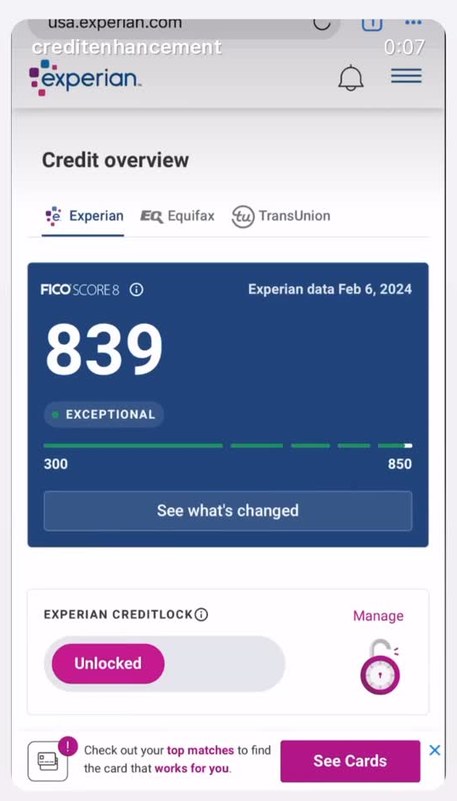
A client reached 839 on Experian in February 2024, rated Exceptional on the FICO Score 8 scale.

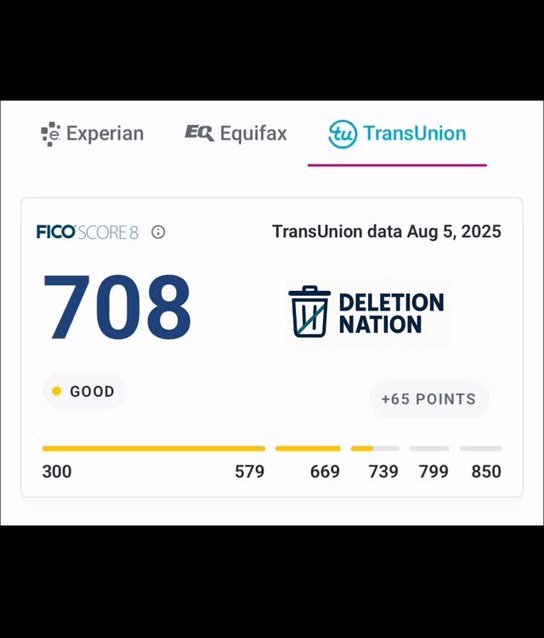
A client’s TransUnion FICO score reached 708 in August 2025, up 65 points in a single update.

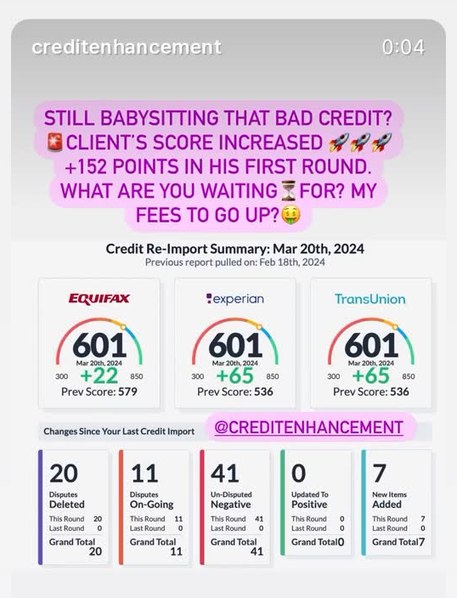
In a first round in March 2024, 20 disputes were deleted and all three bureaus landed at 601: Equifax up 22 points from 579, Experian up 65 from 536, and TransUnion up 65 from 536.

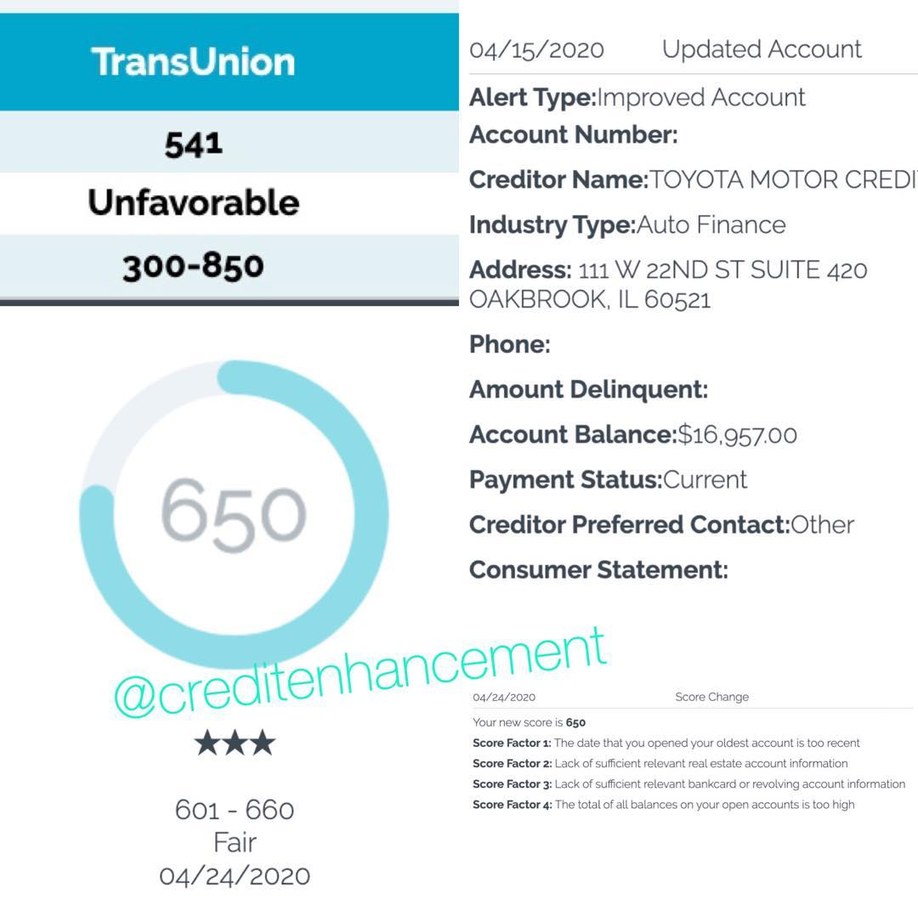
A client’s TransUnion score rose from 541 to 650 in April 2020, a 109-point increase in 20 days, after TransUnion audited the file.
These are real results from past clients. Results vary from person to person and depend on what is in each credit file. Nothing here promises a particular score increase or deletion, and accurate negative information generally cannot be removed. Client names and account numbers have been removed from these images.
Your next step starts with knowing what your reports say. Call (817) 270-9494 or request a consultation online and we will go through it with you.